Cardboard Legends: The Evolution of Baseball Cards
(Photo: 408)
In 2020, I decided to resume my baseball card collecting habit. I’ve always had a deep interest in the hobby—rooted in my love for the game and the nostalgia tied to the players of my childhood.
One player I always revered was Ken Griffey Jr., the electric center fielder for the Seattle Mariners. As a kid, I was constantly in search of his cards, but no matter how many packs I opened, I could never seem to pull one.
When I decided to jump back into “ripping packs,” I had a specific goal in mind: to find one of Griffey’s most sought-after cards without breaking the bank. I set my sights on his 1990 Topps "Rated Rookie" card, which was released the year after his debut season. In 1989, Griffey posted a 3.3 WAR across 127 games, hit 16 home runs, drove in 61 RBIs, and finished third in the American League Rookie of the Year voting.
The search was officially on for a 30-year-old piece of cardboard featuring one of my all-time favorite players.
The Early Era: 1860–1900
Baseball card collecting dates back to the mid-19th century. Early clubs originally took team photographs, some of which were printed onto small cards. Among the oldest survivors are cards featuring the Brooklyn Atlantics from approximately 1860—the same team that became the first to visit the White House in 1865.
As "America’s Pastime" surged in the late 1860s, "trade cards" began featuring individual players. Companies used these images to promote unrelated businesses, a concept similar to a modern athlete appearing in an advertisement. Peck & Snyder Sporting Goods, which is still in operation, is widely considered the first mass producer of these cards.
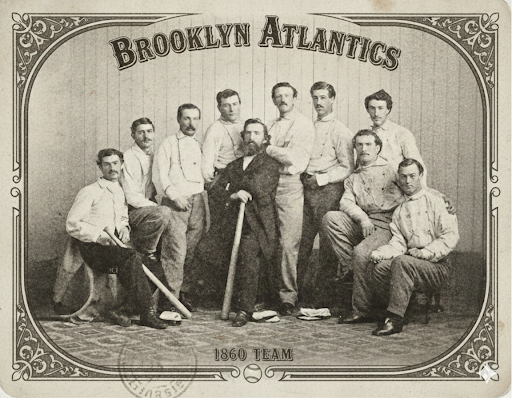
The earliest known baseball card to feature a professional club dates back to 1860, capturing the Brooklyn Atlantics." (Photo: 408)
The Tobacco and Candy Boom
Advancements in color printing by the 1880s boosted the appeal of cards, which were soon packaged with tobacco products. Ironically, manufacturers realized the cards also served a practical purpose: protecting cigarettes from being crushed.
By the early 20th century, the market shifted from tobacco to confectionery and bread companies. In 1903, the Breisch-Williams Confectionery Company produced the first major "set" of baseball cards. This era also birthed the hobby’s "Holy Grail": the T206 Honus Wagner. Wagner famously objected to his image being used to market tobacco to children, leading to a limited production run. In 2022, a T206 Wagner sold for $7.5 million, setting a then-record for the most expensive sports card in history.
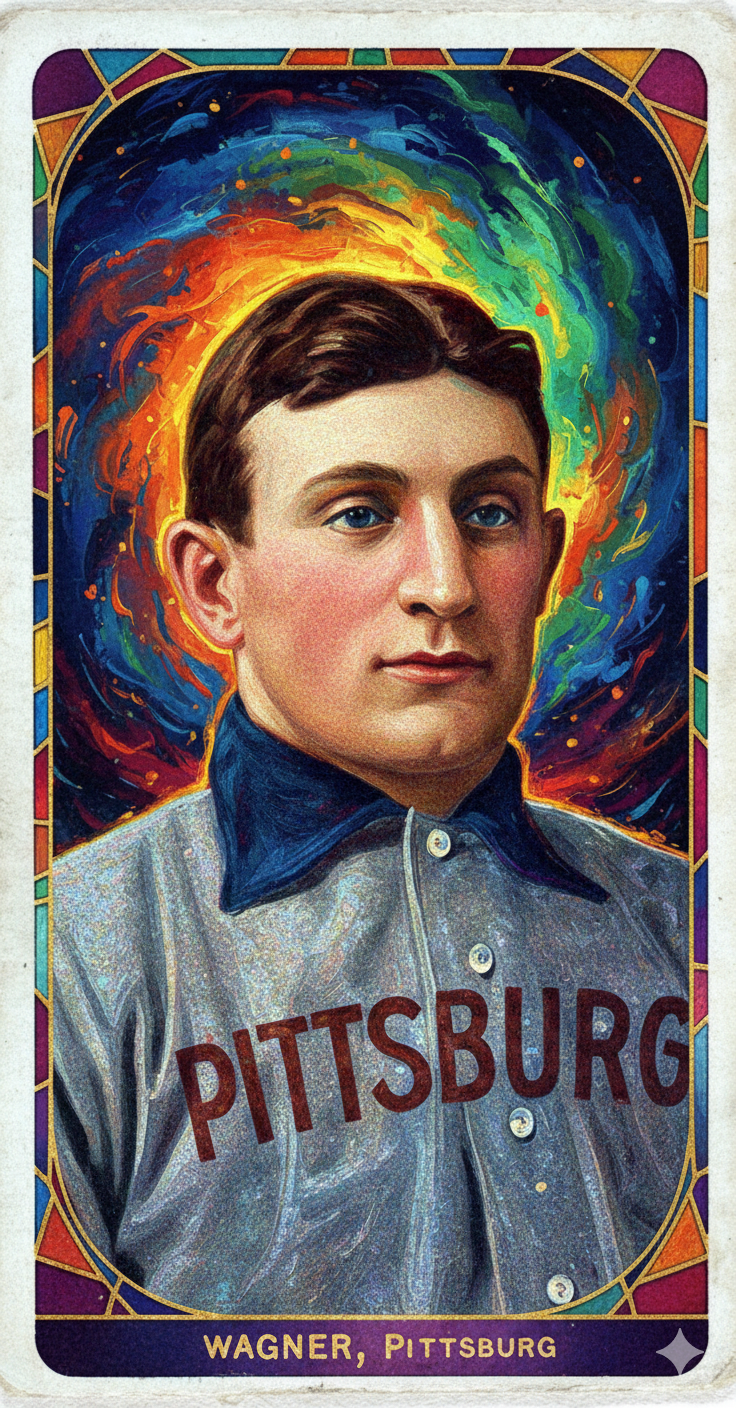
Only 50–200 T206 Honus Wagner cards were ever made. The run was cut short after Wagner objected to the card’s distribution in tobacco packaging, making it one of the rarest collectibles in history. (Photo: 408)
The Rise of the Powerhouses
In the late 1940s, two companies emerged that still define the hobby today: Topps and Bowman. They revolutionized the market with full-color photos, facsimile autographs, and player statistics. They also pioneered exclusive licensing deals—early versions of the "Name, Image, and Likeness" (NIL) deals seen in modern college athletics.
Topps eventually acquired Bowman, though competitors like Fleer, Donruss, Score, and Upper Deck entered the fray by the mid-1990s. This period saw the introduction of bubble gum, stickers, and more intricate designs.
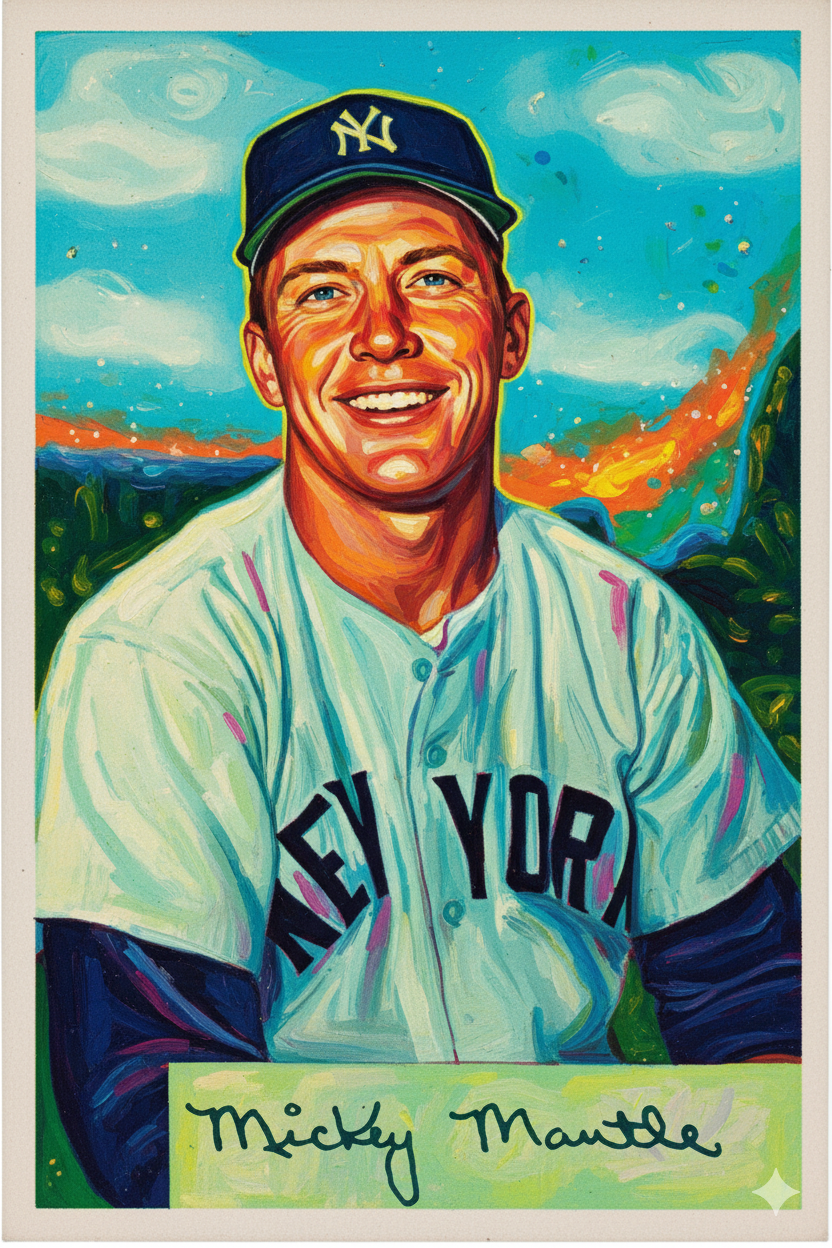
Mickey Mantle’s 1954 Bowman card stands out as a premier offering; the inclusion of his facsimile signature and detailed statistics on the reverse side solidified Bowman’s reputation for excellence. (Photo: 408)
The Modern Market: Rarity and Relics
The 1990s marked a turning point for innovation. In 1997, Fleer introduced the "1-of-1" card, creating instant scarcity. Today, the industry relies on these limited-run "parallels" (numbered to 250, 500, etc.) and "relic cards" containing swatches of game-used uniforms or equipment.
The hobby has never been stronger. Driven by global demand and innovative digital-to-physical integration, baseball card sales alone generated a staggering $13 billion in 2025.
Today’s baseball card manufacturers typically produce four distinct types of cards within a product, each with its own set of characteristics:
• Base Set: These are the standard cards distributed throughout the product. Some of these are "Short Prints" (SPs), meaning they are produced in limited quantities or are individually numbered, making them a challenge to find and collect.
• Parallel Cards: These feature the same design as the base set but include specific variations that distinguish them—and often make them more valuable. Examples include cards with different colored borders, unique textures, or holiday-themed designs.
Parallel cards are a favorite among collectors; by adding a unique twist to a base card's design, they transform common finds into sought-after treasures. (Photos: 408)
• Inserts: These are scarcer cards featuring designs entirely different from the base set. Both inserts and parallels are distributed at specific ratios per pack, which vary depending on the manufacturer and product.
• Memorabilia & Autographs: These cards feature an authentic signature or a piece of game-used uniform or equipment. They are extremely rare and highly sought after by collectors. My son, Jayce, pulled a 2024 Topps Tom Glavine autograph during a New York Yankees vs. Cleveland Guardians game!
My son Jayce pulled his first-ever autograph card today at a game—a 2024 Topps Tom Glavine. I’ve opened plenty of packs, but I’ve never seen a signature pulled live until that day in Cleveland. (Photo: 408)
Value is often in the eye of the beholder, but certain card traits almost always command a higher price. Rookie cards lead the pack—particularly short-printed versions that are harder to find.
Error cards are another gold mine for collectors. You’ve likely heard of the big ones: the 1990 Topps Frank Thomas missing his name, the 1987 Donruss Barry Bonds featuring Johnny Ray instead, or the 1989 ProCards Keith Comstock with a poorly aimed baseball.
And of course, there’s the legendary 1989 Fleer Billy Ripken with the "unfiltered" message on his bat. These unique mistakes can cost a pretty penny!
From Billy Ripken’s profane bat knob to Keith Comstock’s ill-timed encounter with a baseball, these two cards remain the gold standard for memorable—and accidental—error baseball card history.
(Photos: 408)
This hobby is as much a part of the game as hot dogs, "the wave," and bubble gum. Its impact has been felt for more than a century and will only continue to evolve alongside the sport itself.
Baseball cards bring fans closer to their favorite players. Every collection is unique; whether someone chases a specific team, a star player, or rare error cards, the passion of the community remains enduring.
You never know what card or autograph you’ll pull from a pack or box set. If you’re lucky, you might just find the one you’ve been searching for your entire life—much like I did.
(Photo: 408)